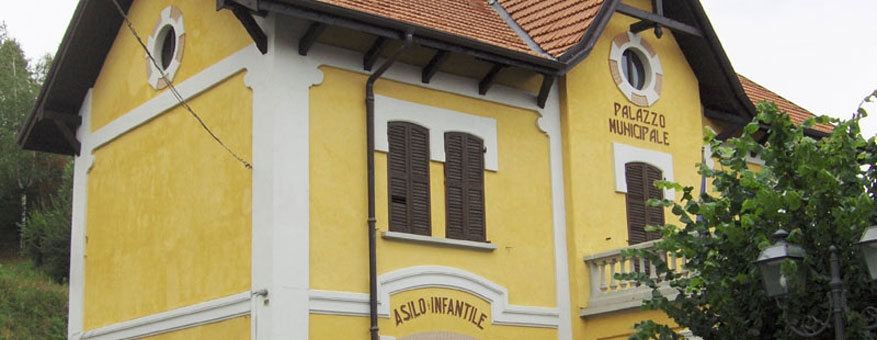
Municipality of Gignese from 1928, Van
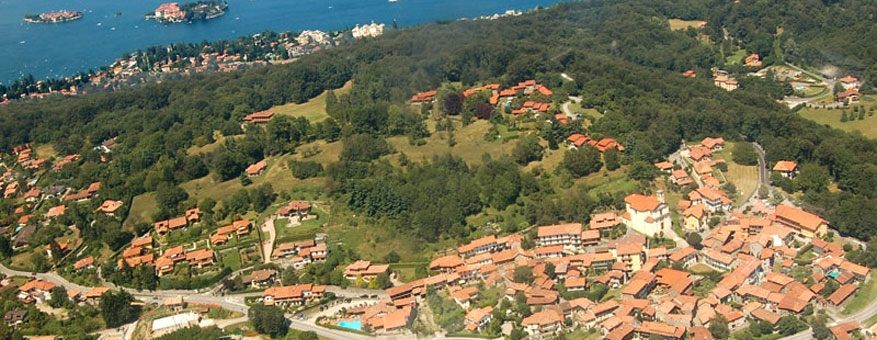
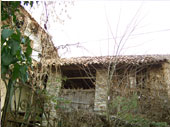
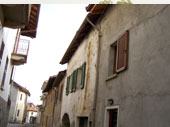
still retains a rural aspect in portals, barns, courtyards with the well
and the devotional image, double Loggia (lòbia and lubión) of the houses
of the 17th-18th centuries, most often in stone and with arches
supported by columns. Around the old centre, new villas and residential
villages. At the cemetery have been found scattered fragments of pottery
of the Roman period, and also the name Van vien was of Roman origin, if
not gallica. The first mention of the town is contained in the aronese
paper dated to 1269, where appear of people paying tribute to Vezo lands
Mazere (= Machere, per Magognino) and Vedasco. If you read the paper in
the light of subsequent events, you can assume that the assets in
question were located on Mergozzolo, where he owned extensive lands,
Vedasco a time certain common properties and then not without
interminable fractional disputes. In 1519 Habit denounced the aggression
of men of Stresa for border issues with the burning of a farmhouse and
embezzlement. The country had some notable families, with clerics,
notaries and public officials: Visconti, Calandra, Dahiya.
One of these is likely to be awarded the
16th-century palace known as ' Castle ' and on which was carved the arms
of Borromeo. It also has news of a painter, Thu. Antonio Martinoli,
active at the beginning of the seventeenth century in Baveno, Campino,
Munich and Ghevio. Spiritual Habit depended in Carpugnino, where since
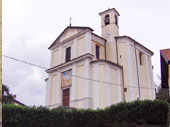
1452 residence had a Canon of Baveno. The Church of SS. Giovanni e
Paolo, is mentioned only in the sixteenth century, but was already
battered and was rebuilt at the beginning of the next century. Is the
construction of the oratory said Crocetta and dedicated to the
assumption, restored in the mid-18th century. In 1760 Habit gained
separation from Carpugnino; and at the end of the century because of the
new parish church, built on the Summit of a hill dominating the country.
The Church possesses a beautiful Lamentation over the dead Christ, of
unknown sixteenth-century painter identified as the Maestro di s. Rocco
of Pallanza; and there, in the Museum landscape, the table was taken and
preserved.
From inquiries to the Census of 1722
results that the country, in 326 produced wine, hay, rye, chestnuts;
There was an Inn with pay, two oil presses and wine. During the
Napoleonic period Van stopped paying tithes agreed with Carpugnino
citing, among other reasons, his poverty. After the restoration of 1815
Carpugnino wrote that "Habit makes wine for its use, abounds in Hays,
walnuts, chestnuts, pastures, cattle, etc.; and boasts of being in the
neighborhood one of the most prosperous countries for copia de ' wealthy
with details». Carpugnino and Stropino themselves instead "poor and
Majeed»; There is of course doubt on both claims, for blatant excess and
defect, but when it came to money to shell out needed to be convincing.
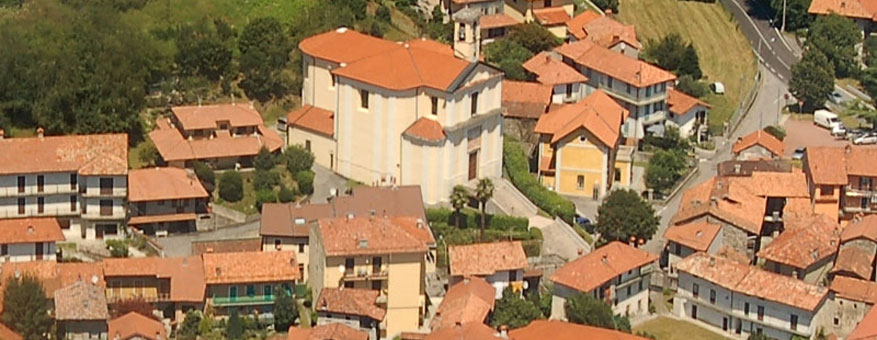
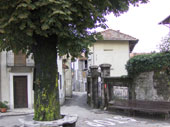
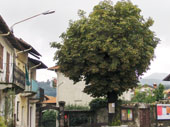
The most characteristic point of the country is the central square or
Piazza dei Caduti where, at the foot of pink granite staircase that goes
up to the parish church, is a centenarian horse chestnut surrounded by a
ring true in early altar from well water. Taking the via IV Novembre, at
no. 5 there is a fresco of the Madonna di Caravaggio, rescued by a
pre-existing chapel, and later a stone engraving (with glass carafe)
likely remake of an earlier engraving with protective function, as well
as some time door arches, in which are embedded fragments of melting
slag. This protection was then entrusted to the devotional images,
especially of Madonna, but also to horseshoes, or entrusted, with
greater pragmatism, the Tin plates of insurance against fire. Just above
the village, a dairy barn keeps a curious inscription of such Contini,
the soldier of Napoleon in Russia and other places. Descending from
piazza Caduti in via Cavallotti, and crossed the road, lies the ' Castle
', the sixteenth-century building by the sober architecture and severe.
On the right a small road leads to the Sports Centre and at the
cemetery, with the now abandoned chiesa della Crocetta. The place is
charming, and the look from the back of Mount Mottarone that descends to
the East until poggio di Nocco, high above the Grisana Valley. Further
down, over the fields and fruit trees surviving the abandonment of the
countryside, the Valley of Carpugnino and morena slope toward the top of
the Motta Rossa. Belong to our time building a nine-hole golf course
(Golf Club Stresa) and construction, in the landscape, a new church next
to the House of Nazareth; an initiative for the religious education of
adolescents, founded by Fr. Hyginus Silvestrelli di Verona (1969). The
nearby Hotel Panorama, currently undergoing transformation, hosted by
his pupil Cantelli Toscanini and, on several occasions, the
Director-writer Mario Soldati who collected the memories of his vezzesi
stays in the mass volume of vacationers
|

|